
 English
 Français
 Deutsch
























Choosing and using the right rigid ESD packaging
Custom thermoformed trays, dissipative boxes, antistatic pallets: materials, tolerances, maintenance and IEC 61340 compliance for every application.
General
What types of rigid ESD packaging does Eurostat offer?
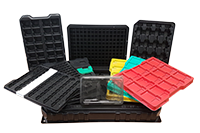
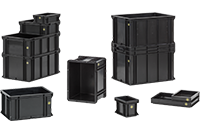
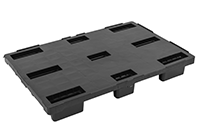
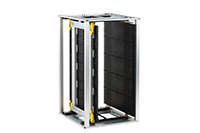
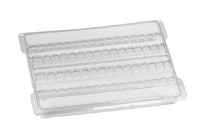
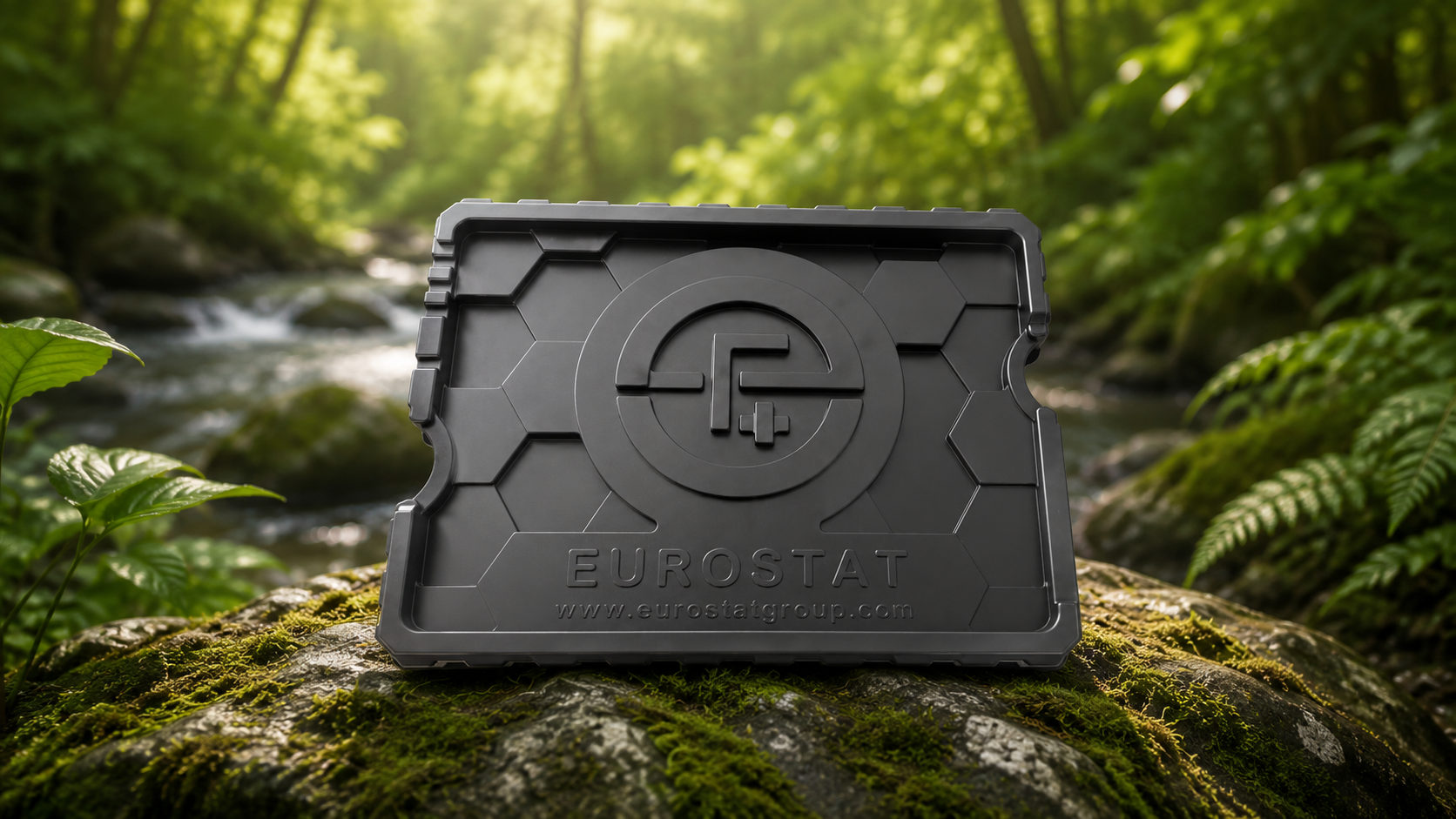
Eurostat offers a full range of rigid ESD packaging: custom or standard thermoformed trays, antistatic boxes and lids, rigid pallets, magazines and containers for loose components. Each solution is qualified to IEC 61340 standards and adapted to your process, storage and transport constraints.
What is the difference between antistatic and dissipative packaging?
An antistatic (low-charging) material generates little or no electrostatic charge through friction, but does not drain existing charges. A dissipative material (resistance between 10^5 and 10^11 ohms) drains charges to ground in a controlled, gradual way. In an EPA, containers in direct contact with sensitive components must be dissipative and grounded.
Can rigid ESD packaging be used outside an EPA?
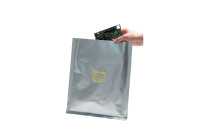
Dissipative rigid packaging alone does not protect components from external electrostatic fields outside an EPA. For transport or storage outside a protected area, it must be combined with shielding packaging (a metallised bag or cover) that forms a Faraday cage around the rigid container.
Materials
What materials are used for ESD thermoformed trays?
Eurostat thermoformed trays are mainly made of PS (polystyrene), PP (polypropylene) or PET, with a conductive or dissipative additive incorporated into the bulk of the material. Unlike surface treatments, this property is permanent and does not wear off over time, with cleaning or with repeated handling. Our proprietary materials (E-STAT, Nano-STAT, Clear-STAT, Soft-STAT) offer properties optimised for each application.
What is the electrical resistance of a Eurostat thermoformed tray?
Our thermoformed trays are in the dissipative category, with a surface resistance generally between 10^6 and 10^9 ohms depending on the material chosen. Exact values are measured according to IEC 61340-2-3 and are given in our product data sheets. Our trays meet the requirements of IEC 61340-5-1.
Are Eurostat ESD materials RoHS and REACH compliant?
Yes. All our materials comply with RoHS and REACH and contain no substances of very high concern (SVHC) on the ECHA list. Our Quality and Purchasing teams ensure this compliance is maintained across all our suppliers.
Do you offer transparent materials for ESD trays?
Yes. Clear-STAT is a transparent dissipative material that allows visual inspection of components without opening the container. It is particularly suited to quality control applications and environments where visibility of the contents matters.
Custom thermoforming
How does the custom tray design process work?
The process starts with you sending your components or their 3D drawings to our technical teams. Together we define the process constraints (robot, operator, handling speed), dimensional tolerances, the right material and the number of cavities per tray. We then produce a prototype for validation before launching series production.
What dimensional tolerances can you achieve?
The tolerances achievable in thermoforming depend on the component’s geometry, its material and the process constraints. Our technical teams define the applicable tolerances case by case during the study. For applications requiring very high precision (BGA components, bare dies), we can look into complementary solutions.
What are the lead times for a custom thermoformed tray?
Lead times vary with the complexity of the project and are confirmed in the order acknowledgement. They include tool design, prototyping and validation before series launch. Contact our sales team with your specifications for an accurate estimate.
What is the minimum order quantity for a custom order?
The minimum order quantity for a custom tray depends on the part’s dimensions and complexity. It is defined during the commercial study. For small series or prototypes, contact our sales team, who will assess feasibility based on your needs.
Use and maintenance
Are ESD thermoformed trays reusable?
Yes, Eurostat thermoformed trays are designed for repeated use. As their dissipative property is built into the bulk of the material (not the surface), it is not degraded by handling or cleaning. Service life depends on the conditions of use and handling frequency.
How can I clean an ESD thermoformed tray without affecting its properties?
Trays can be cleaned with ESD-compatible cleaning products (non-ionic ESD cleaners) applied with lint-free cloths. Avoid aggressive solvents, chlorinated products and abrasive sponges, which can damage the surface. After cleaning, check the electrical properties with a surface resistance tester.
How can I check that an ESD tray is still compliant after use?
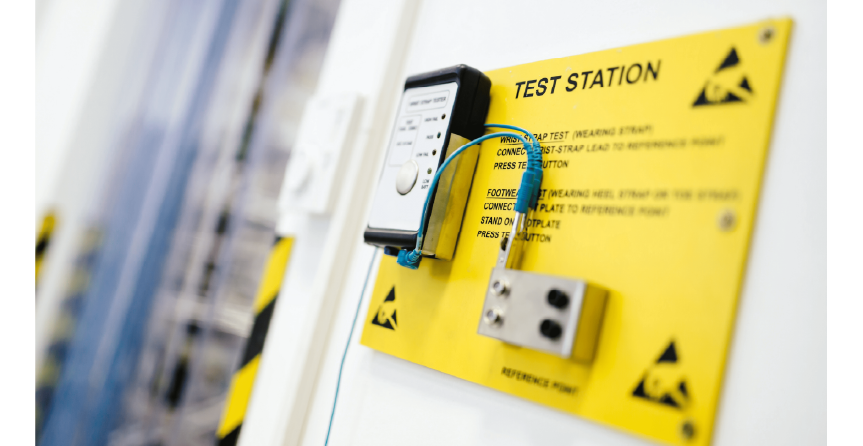
Compliance is checked regularly with a surface resistance meter using the IEC 61340-2-3 method. Verification frequency is defined in your EPA compliance verification plan (IEC 61340-5-1). If a value is out of specification, the tray must be quarantined and replaced.