
 English
 Français
 Deutsch


























ESD protection for the medical and pharmaceutical sector
Care-Stat range, electronic medical devices, GMP constraints and MDR: the specific features of antistatic protection in healthcare environments.
Care-Stat range
What is Eurostat’s Care-Stat range?
Care-Stat is Eurostat’s line of ESD products specifically designed for medical, pharmaceutical and biotechnology environments. It includes personal protective equipment (coats, coveralls, gloves, head covers, overshoes) that combines the required ESD properties with the specific constraints of the medical sector: biocompatibility, resistance to disinfectants, low particle emission and comfort for long periods of wear.
What certifications do Care-Stat products have?
Care-Stat products are qualified to the applicable ESD standards (IEC 61340) and meet the regulatory requirements of the medical and pharmaceutical sector for the markets concerned. Each product’s data sheet details the certifications and qualifications obtained. Contact our sales team for compliance documents specific to your market or application.
Are Care-Stat products single-use or reusable?
The Care-Stat range includes both options, depending on the application and the facility’s hygiene protocols. Single-use products offer maximum protection against cross-contamination and simplify waste management. Reusable products (washable coats and coveralls) are suited to environments where cleaning and decontamination protocols are under control. The ESD properties of reusable products are maintained after washing in accordance with the manufacturer’s instructions.
ESD in medical environments
Why is ESD protection important in the medical sector?
The medical sector increasingly uses embedded electronic devices (implants, defibrillators, insulin pumps, connected sensors) whose manufacture and assembly require rigorous ESD protection. In addition, electronic diagnostic and monitoring equipment in hospitals can be affected by electrostatic discharge. ESD protection ensures the reliability and safety of these critical devices.
What are the specific ESD requirements in medical device manufacturing?
Medical device manufacturing combines the ESD requirements of IEC 61340-5-1 with the sector’s specific regulatory constraints: enhanced traceability, qualification of equipment and materials, compatibility with sterilisation processes, and compliance with the EU Medical Device Regulation (MDR) in Europe. All materials in contact with the medical device or its manufacturing environment must be qualified and documented.
Can standard ESD products be used in a pharmaceutical environment?
Not always. Pharmaceutical environments impose strict constraints on the materials allowed: absence of certain chemical additives (plasticisers, flame retardants), resistance to cleaning and disinfecting agents (alcohol, hydrogen peroxide), low outgassing and compatibility with Good Manufacturing Practice (GMP). Care-Stat products are specifically formulated to meet these constraints while maintaining their ESD properties.
ESD medical packaging
What specific constraints apply to packaging electronic medical devices?
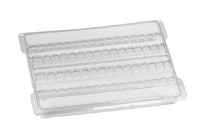
Packaging for electronic medical devices must combine ESD protection (shielding, dissipative properties) with medical packaging requirements: sterilisation compatibility (EtO, gamma irradiation or steam, depending on materials), sterile barrier integrity, traceability (batch number, expiry date), and compliance with ISO 11607 for sterile packaging. These multiple constraints require each solution to be specifically qualified.
Can Eurostat supply packaging solutions for electronic medical devices?
Yes. Eurostat has the expertise to design and qualify packaging solutions that combine ESD protection with medical requirements. Our technical team can support you in defining requirements, selecting materials and carrying out the necessary qualification tests. Contact our sales team with your specifications for a tailored study.
Hospital equipment and ESD
Is ESD protection needed when servicing electronic hospital equipment?
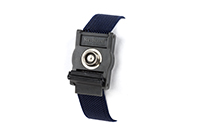
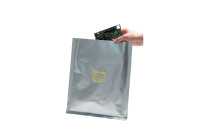
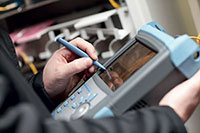
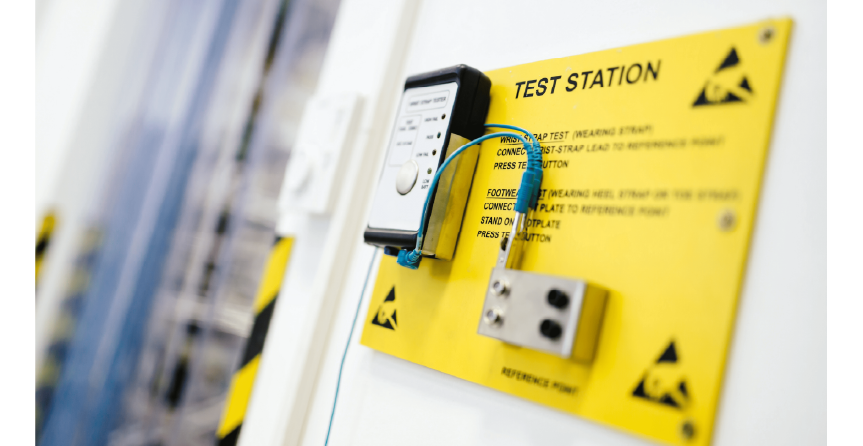
Yes. Servicing electronic medical equipment (monitors, imaging equipment, infusion systems, ventilators) requires the same ESD precautions as any other electronic equipment. Maintenance technicians must use a grounding wrist strap, work on a dissipative mat and store PCBs in suitable ESD packaging. A failure caused by ESD damage to critical medical equipment can have serious consequences for patients.
Can electrostatic discharge disrupt medical equipment in operation?
Yes. Electrostatic discharge can disrupt or damage electronic medical equipment in operation, particularly in low-humidity environments. IEC 61000-4-2 defines the electrostatic discharge immunity tests that medical devices must pass. In addition, controlling ambient humidity (keeping it above 40–50%) and using antistatic floors and equipment in care areas help reduce these risks.