
 English
 Français
 Deutsch










































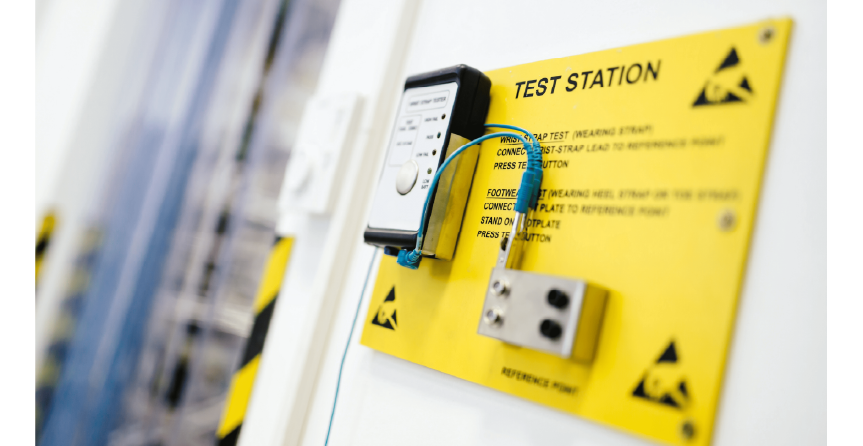



Training, auditing and maintaining your ESD control programme
3-level training, IEC 61340-5-1 compliance audits, Prostat-authorised calibration and laboratory product characterisation: Eurostat services to keep your EPA secure over time.
ESD training
What levels of ESD training does Eurostat offer?
Eurostat offers three levels of ESD training tailored to different profiles. The operator level (level 1) is for staff who handle sensitive components: it covers ESD basics, the risks, correct use of protective equipment and good practice in an EPA. The technician level (level 2) is for workstation supervisors and maintenance technicians: it goes deeper into IEC standards, measurement methods and equipment verification. The ESD coordinator level (level 3) trains ESD managers to run a complete ESD programme compliant with IEC 61340-5-1.
Is ESD training mandatory under IEC 61340-5-1?
Yes. IEC 61340-5-1 requires all personnel working in an EPA or handling sensitive components to be trained in ESD risks and the applicable protection procedures. This training must be documented and repeated at a frequency defined in your training plan (often annually for operators), and records must be kept. A lack of documented training is a major non-conformity in a compliance audit.
Is Eurostat training available on-site?
Yes. Our training is mainly delivered on-site, at your premises, which means examples and practical exercises can be adapted to your actual production environment. Our trainers can use your equipment, workstations and existing procedures to make the training immediately applicable. Multi-company sessions can also be organised on request.
What is an ESD coordinator and what does the role involve?
The ESD coordinator is responsible for the company’s ESD control programme. The role is defined by IEC 61340-5-1: the coordinator writes and maintains the ESD control plan, oversees internal audits, manages the equipment verification programme, ensures staff are trained, and is the main contact during customer or certification audits. Eurostat’s level 3 training prepares for all these responsibilities.
ESD audits
What does a Eurostat ESD audit involve?
A Eurostat ESD audit is a complete assessment of your electrostatic discharge control system against the requirements of IEC 61340-5-1. It includes a document review (ESD control plan, training records, verification reports), on-site measurements (equipment resistance, electrostatic fields, personnel compliance) and a risk analysis. A detailed audit report listing the gaps identified and recommended corrective actions is provided at the end of the audit.
What is the difference between an internal audit and a Eurostat audit?
An internal audit is carried out by your ESD coordinator according to your control plan. It is required by the standard and must be documented. A Eurostat audit is an external audit carried out by our independent experts, bringing a fresh perspective and in-depth knowledge of the standards. It is particularly useful when preparing for customer audits, seeking certification, identifying blind spots in your internal programme, or setting up your EPA for the first time.
How do I prepare for a customer or certification ESD audit?
Preparation covers four areas. Documentation: your ESD control plan must be up to date, signed and accessible. Records: all equipment verifications, training and measurement results must be tracked and kept. Equipment: all measuring instruments must be calibrated, and EPA equipment checked and compliant. Personnel: every operator must be able to demonstrate their training and command of the procedures. A Eurostat mock audit before the official audit lets you identify and correct any remaining gaps.
Technical service and Prostat calibration
Which equipment can Eurostat calibrate?
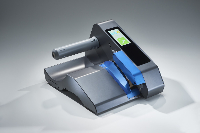
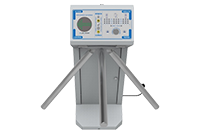
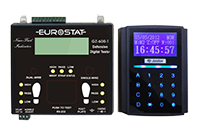
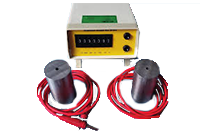
As a Prostat Authorized Calibration Lab, Eurostat calibrates the full range of ESD measuring instruments: surface and volume resistance meters, electrostatic field meters, wrist strap testers, footwear testers, charged plate monitors for ionisers, and continuous monitors. Each calibration comes with a calibration certificate traceable to national standards, in line with the requirements of IEC 61340-5-1.
What is Prostat authorisation and why does it matter?
Prostat Corporation is a leading US manufacturer of ESD instrumentation. Prostat authorisation confirms that Eurostat has the skills, equipment and methods to calibrate Prostat instruments according to the manufacturer’s procedures. This recognition of expertise ensures the reliability of the calibrations performed. Eurostat is one of the few Prostat-authorised laboratories in Europe.
How long is a calibration certificate valid?
The recommended validity period is one year for most ESD measuring instruments, in line with good practice and the requirements of many EPA control plans. Some instruments used in very demanding environments (high criticality, frequent audits) may need more frequent calibration. The next calibration date is shown on the certificate and on the label attached to the instrument.
Laboratory product characterisation
What is Eurostat’s product characterisation service?
Eurostat’s characterisation laboratory carries out measurements on your own ESD materials, packaging or equipment using the methods defined in the IEC 61340 standards. We can measure surface resistance, volume resistance, charging voltage, decay time and shielding effectiveness. A documented characterisation report is issued after testing, which you can use as proof of compliance with your customers or principals.
When should I use the characterisation service?
The characterisation service is useful in several situations: qualifying a new ESD supplier or material, checking the compliance of a competing or replacement product, providing proof of compliance to a demanding customer, or solving an unexplained ESD problem in production. Our experts can also advise you on the most suitable test methods for your application.